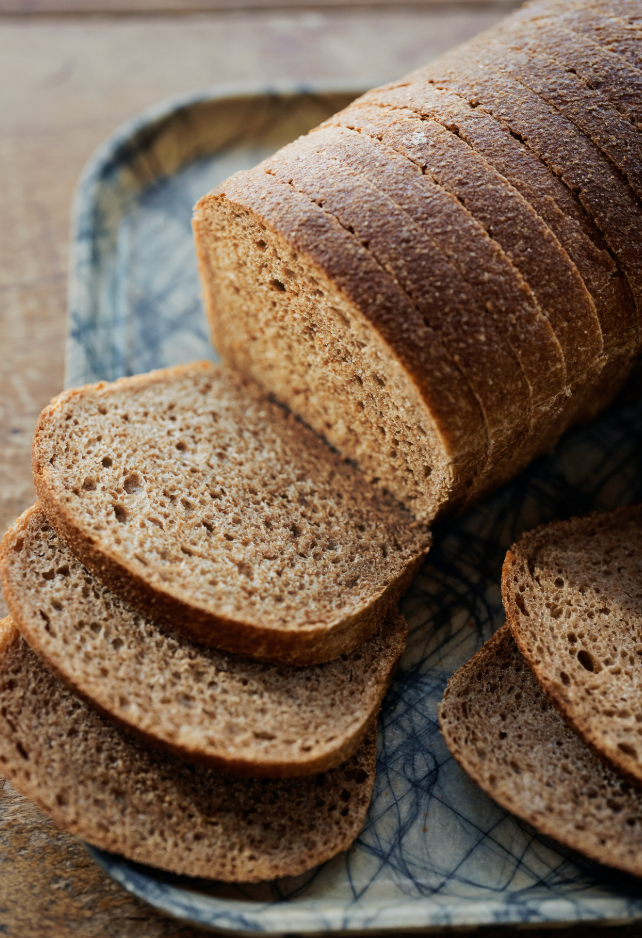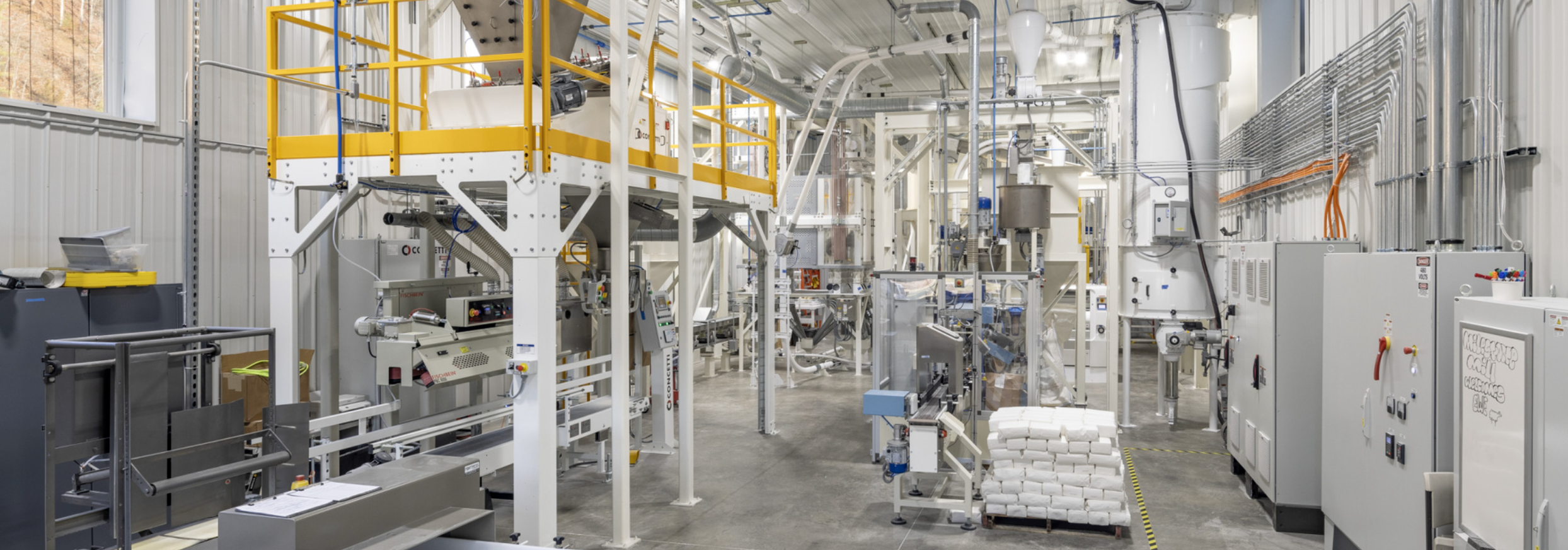
Hudson Valley wheat, milled in Hurley
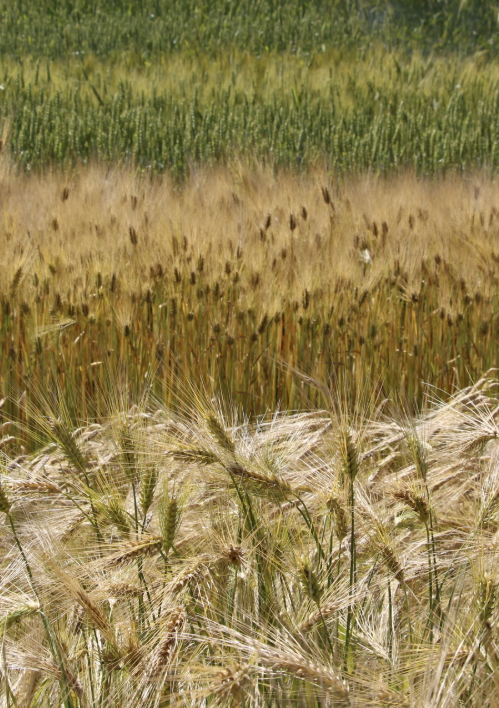
Where the wheat comes from
Every bag of flour starts on a Hudson Valley farm. We buy wheat from farmers in the region, so the grain in your child's sandwich bread may have grown a short drive from their school.
Why whole grain matters
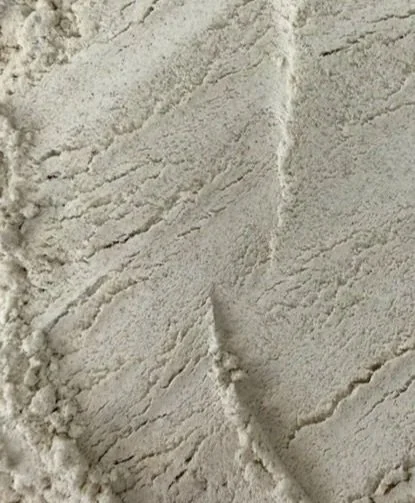
Whole wheat flour keeps all three parts of the wheat kernel: the bran, the germ, and the inner endosperm. That means more fiber and more of the grain's natural nutrients than white flour. It's why whole wheat flour goes into the sandwich bread we make for schools, bread that meets school nutrition standards and tastes like bread kids want to eat.
How we make flour
Milling is simpler than it sounds. Here's what happens to the wheat once it gets to us:
We clean it. Wheat comes in straight from the field, so we remove dirt, stones, straw, and other seeds before anything else.
We test it. We check each batch for quality and safety before it goes into the mill.
We temper it. We add just enough water to bring the wheat to about 14% moisture. That helps the outer layer of the grain, called the bran, come off cleanly, which gives us flour that bakes into soft, familiar bread.
We mill it. The mill grinds the wheat into flour, and we sift it to make different kinds.
We make whole wheat, all-purpose, and bread flour. We also mill buckwheat, taking off its tough outer shell so the flour is mild enough for pancakes and baked goods.